

George Yang Posted:
Category: Previews 0

The Soulslike genre is one of the most influential in video games. Games like Lies of P, Nioh, and The Surge have all taken their own stabs at the genre with their own unique twists, such as Nioh’s battle stances and The Surge’s dismemberment system. But there’s one intersection that surprisingly hasn’t been explored nearly as much as you’d expect: Soulslike and anime.
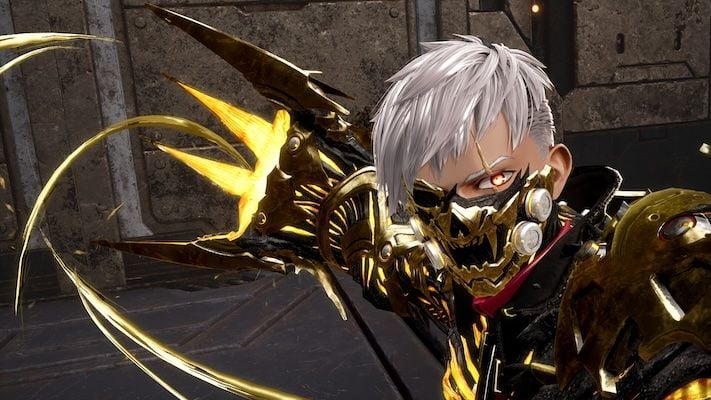
This is where Bandai Namco’s Code Vein II comes to fill that hole. It’s an aggressive Soulslike that rewards players for getting up close into enemy faces that has certain RPG and action game mechanics that could bring in fans that may not otherwise play a Soulslike.
MMORPG.com spent 3 hours playing Code Vein II and sat down with producer Keita Iizuka and director Hiroshi Yoshimura to discuss the game’s combat mechanics and what makes it stand out from others in the Soulslike genre.
Code Vein II takes place in a post-apocalyptic world ravaged by a disaster known as the Resurgence, which turned the majority of humans and animals into monsters. Heroes known as Revenants sealed the calamity away with the Luna Rapacis, and each of them fell into an eternal slumber. However, over the century, the seal has gradually weakened. With the life force of these heroes continuing to drain and the seal being too powerful, there’s only one other approach to prevent another Resurgence. Players must join Lou, a time traveling Revenant, to travel back in time in order to break the seal and free the heroes from their burden.

The story is a bit confusing from the start, as I’m wondering how breaking the seals in the past will help stop the Resurgence. But I’m sure that as I get further into the game, that the lore will make more sense. At the very least, its story isn’t cryptic like Elden Ring’s, and I can follow it a bit better.
In any case, Lou immediately transported us into the past on MagMell Island, a dungeon area teemed with monsters. Here, I got a taste of the combat. It has your typical weak and strong attacks, but what makes it stand out is its emphasis on partners. Unlike other Soulslike games, you don’t have to go through this game alone. Oftentimes you’ll have a CPU partner in Lou or another story-relevant Revenant character.
This helps ease off the pressure when you’re fighting multiple enemies, as they won’t all focus on you. Your partner can also initiate a Restorative Offering when you die, giving you a second wind at the expense of your partner being temporarily unavailable. While these aspects seemingly make Code Vein II an “easier” game in the Soulslike genre, that’s not the intention.
“Instead of these characters just being support AI that lower the difficulty across the board, they all have unique back stories and relationships,” Yoshimura explains. “How you and your partner interact and change to their fates is something that makes the immersion quite different from some of the other games in the Soulslike genre, and that’s something that I think will continue to be a pillar for the Code Vein franchise.”
What makes Code Vein II different from other Soulslike games is its emphasis on maintaining the offense rather than being on the backfoot. Sure, you’ll have to dodge enemy attacks, but the game’s mechanics reward you for being aggressive. One way that it achieves that is through its Blood Code system and a new mechanic called Formae attacks.

The former act as sort of classic “character classes” like you’d see in an RPG, while the latter lets you unleash special attacks that make this sequel sometimes feel like a more exciting action game.
“For the first Code Vein, one piece of positive feedback that we got was on the Blood Code system and how we allowed players to be able to customize their builds, including the skill setups,” Iizuka says. “In Code Vein II, we wanted to expand upon that, but we didn’t want to take away the ease of swapping different builds and the ability to allow players to have a lot of trial and error loops. So we had [Blood Codes] as a base.”
Using a Forma attack costs Ichor, which is the game’s MP mechanic. And in order to restore Ichor, players can perform a Drain Attack, which is a slow but powerful attack. The gameplay loop between exhausting your Formae attacks and the restoring Ichor via Drain Attacks was satisfying. During the preview’s first boss, Metagen Remnant, a giant four-armed plant-like lady, I had to dodge her blows and time my Drain Attacks while she was recovering. While Code Vein II is certainly more aggressive than its contemporaries, I still have to be careful not to overextend myself, or I’ll die.
“Within the context of Code Vein II, weapons are a much bigger factor in terms of the customization,” explains Iizuka. “The actions themselves can be bound to weapons, which enables even swapping weapons can change the move set or actions of your characters themselves.”
Code Vein II has really set a niche for itself within the Soulslike genre, not only by its gothic anime aesthetic, but also by putting its own spin on mechanics. Its fast-paced combat feels exhilarating, and the story has the potential seeds to sprout into something intriguing, even if it’s a bit unclear at first. I can’t wait to play Code Vein II when it launches on January 29 for PC, PS5, and Xbox Series X|S.

 Christina Gonzalez